

Acne Scar Treatment in Tucson: Which Treatments Actually Work?
Updated: May 21

Acne scars can be incredibly frustrating because they often stick around long after the breakout itself is gone. You may have cleared the acne, changed your routine, tried the “miracle” products, and still feel like your skin is holding onto the past like it has a dramatic flair for storytelling.
For Tucson residents, acne scars can be even more stubborn. The desert sun can make dark spots look more noticeable, and the dry climate may slow the natural skin renewal process that helps discoloration fade over time.
The good news is that you are not stuck with acne scars forever. At Siren Skin Care in Tucson, professional skin treatments can help improve texture, soften visible scarring, and support healthier-looking skin over time. The key is choosing the right treatment for the type of scar you have.
Understanding the Types of Acne Scars
Not all acne scars are the same — and the type of scar you have determines which treatment will be most effective.
Atrophic (Depressed) Scars
These are the most common types. They form when the skin loses collagen during healing, leaving a depression. Subtypes: Rolling scars (broad, shallow), Boxcar scars (wide, rectangular), and Ice-pick scars (deep, narrow — the most difficult to treat).
Post-Inflammatory Hyperpigmentation (PIH)
Flat dark spots left behind after a pimple heals. Very common in Tucson, given the UV environment. Responds well to surface-level treatments like chemical peels.
Hypertrophic and Keloid Scars
Raised scars formed when the skin produces too much collagen during healing. More common on the chest and back than on the face.

Which Treatments Work Best?
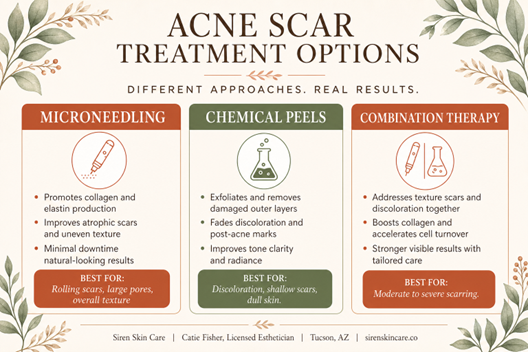
Collagen Induction Therapy (Microneedling)
Best for: Rolling scars, boxcar scars, overall texture improvement, mild-moderate ice-pick scars.
CIT uses fine sterile needles to create controlled micro-channels in the skin, triggering the body's natural collagen production. For atrophic acne scars, this collagen rebuild gradually fills in depressed areas. Research shows patients see 50–80% improvement in scar depth after a series of sessions. Most clients need 4–6 sessions spaced 4–6 weeks apart.
Chemical Peels
Best for: Post-inflammatory hyperpigmentation, surface texture, mild rolling/boxcar scars.
A chemical peel removes pigmented surface cells to fade dark spots, triggers mild collagen stimulation, and improves overall skin texture. Peel strength is selected based on your skin type, tone, and sensitivity. Important: strict SPF 50 use is critical post-peel in Tucson's UV environment.
Combination Approaches
Best for: Complex scar presentations. Most effective plans combine CIT for structural improvement with chemical peels for surface discoloration — addressing both the depth and surface of the scar simultaneously.
What Results Should You Realistically Expect?
• Most atrophic scars can be improved by 50–80% with a proper treatment series
• PIH (dark spots) typically responds fastest — significant fading after 2–3 peels
• Results accumulate over months, not days
• Tucson's UV environment means strict sun protection is non-negotiable during treatment
Frequently Asked Questions
How many sessions will I need?
Mild PIH may improve after 2–3 peels. Moderate atrophic scarring typically requires 4–6 CIT sessions over 4–6 months. Catie will give you a realistic estimate at your consultation.
Does acne scar treatment hurt?
CIT is performed with topical numbing cream — most clients describe it as a scratchy sensation, not painful. Peels may cause temporary tingling.
Can darker skin tones receive these treatments?
Yes, with proper technique selection. Catie takes skin tone into account for every treatment plan.
Ready to Finally See Real Results?
You do not have to keep guessing which product or treatment might finally work. If acne scars, dark spots, or uneven texture are making you feel less confident in your skin, a professional treatment plan can help you move forward with clarity.
Siren Skin Care serves clients throughout Tucson, Oro Valley, Catalina Foothills, Marana, and the University of Arizona area.
Book your acne scar consultation today or call (520) 955-6560 to talk through the best treatment options for your skin.
📍 1601 N Tucson Blvd #19, Tucson, AZ 85716


Comments