

Non-Surgical Eyelid Lift in Tucson: Tighter, Younger-Looking Eyes Without Going Under the Knife

📋 QUICK SUMMARY
Drooping or hooded eyelids are one of the most common signs of aging — and one of the most noticeable. Traditional blepharoplasty (surgical eyelid lift) works, but it comes with downtime, risks, and a steep price tag. At Siren Skin Care in Tucson, we use non-invasive plasma skin tightening (fibroblast therapy) to lift and tighten the upper and lower eyelid area — no scalpel, no stitches, no general anesthesia. Read on to find out how it works, who it's for, what to expect, and how results compare to surgery.
When the Arizona Sun Starts Showing Up Around Your Eyes
Tucson is breathtaking. The Sonoran Desert light is golden, warm, and completely unforgiving.
If you've lived here any length of time, you know: the UV index is brutal most of the year, the air is relentlessly dry, and the skin around the eyes — thin, delicate, and constantly expressive — tends to age faster here than almost anywhere else in the country.
You look in the mirror and notice it. The upper eyelids are starting to feel heavy. There's a hood of skin settling over the lash line. Maybe the lower lids look puffier or more creased than they used to. The eyes that used to look wide and awake are starting to look tired — even when you're not. It's not vanity to want to change that. It's about looking like how you actually feel.
For decades, the only answer was surgical blepharoplasty — eyelid surgery. And while it can be effective, it's also expensive, carries real surgical risks, and requires a recovery period that isn't workable for many people. Not everyone wants to go under general anesthesia for a cosmetic procedure. Not everyone can take two weeks off.
That's where non-surgical eyelid lifting comes in. And at Siren Skin Care in Tucson, it's one of the most sought-after treatments we offer.
What Is a Non-Surgical Eyelid Lift?
A non-surgical eyelid lift uses plasma skin tightening — also called fibroblast therapy — to contract, tighten, and resurface the loose skin around the eyelid area without any cutting or injectables.
Here's how it works:
Plasma is the fourth state of matter. When a specialized device is held just above the skin, it creates a small controlled arc of plasma energy between the device tip and the skin's surface. That arc creates a tiny controlled injury (called a "carbon dot") that triggers the skin's fibroblast cells to go to work — producing new collagen, elastin, and tightening the surrounding tissue.
The skin doesn't just resurface. It contracts. The treated area shrinks and lifts.
Over the next 6–12 weeks, as your body's natural healing process completes, that lift becomes increasingly visible. The hooded upper lid becomes less prominent. The lower lids look tighter. The overall eye area looks more open and rested — without any scalpel.
At Siren Skin Care, Catie Fisher has refined her plasma technique specifically for the periorbital (around the eye) area — one of the most delicate treatment zones on the face.
How a Non-Surgical Eyelid Lift Compares to Blepharoplasty
Let's be honest: surgical blepharoplasty is effective. For severe ptosis (true lid drooping that affects vision), surgery is still the gold standard. But for the vast majority of people dealing with cosmetic eyelid concerns — hooding, crepey skin, mild to moderate laxity — plasma tightening delivers comparable aesthetic results with a very different risk/benefit profile.
Non-Surgical (Plasma) vs. Surgical (Blepharoplasty):• Anesthesia: Topical numbing cream only vs. General or local anesthesia• Incisions: None vs. Yes — along natural eyelid crease• Downtime: 7–10 days (minor swelling/dots) vs. 10–14 days minimum• Risk of complications: Very low vs. Surgical risks: infection, scarring, asymmetry• Cost: Significantly lower vs. $3,000–$8,000+• Results timeline: 6–12 weeks post-treatment vs. 4–6 weeks post-surgery• Touch-up friendly: Yes — can repeat in 12–18 months vs. Repeat surgery is uncommon
Plasma tightening won't replicate the results of surgery for someone with extreme lid drooping. But for someone in the moderate range — which describes most people who walk through our door — the visual outcome is remarkably similar, with a fraction of the risk, cost, and recovery.

What the Treatment Feels Like
Many clients are understandably nervous before their first plasma treatment around the eyes. It's an intimate, delicate area, and the idea of a plasma arc near your eyelid sounds alarming until you actually experience it.
Here's what happens during your appointment at Siren Skin Care:
1. Consultation and assessment. Before we do anything, we look at your skin, your eyelid anatomy, and your goals. Not everyone is a candidate for every area of plasma treatment. We discuss expectations, walk through the healing process, and make sure you're fully informed.
2. Topical numbing: A topical anesthetic cream is applied to the treatment area and left on for 30–45 minutes. Most clients feel the treatment area become noticeably numb — not completely without sensation, but very comfortable.
3. The treatment. The plasma device creates a series of small carbon dots in a precise grid pattern across the treatment area. Most clients describe the sensation as tiny warm pinpricks — noticeable but not painful. The treatment itself takes 20–45 minutes, depending on the area being addressed.
4. Immediate aftercare: Your skin will look pink and puffy right after treatment — this is normal and expected. You'll receive detailed aftercare instructions. The small carbon dots (which look like tiny freckles) will shed naturally over 7–10 days. During this time, you'll want to minimize sun exposure and avoid makeup on the treated area.
5. The healing window. In the first week, there's visible evidence of treatment (the dots, some swelling, particularly under the eyes). By day 10–14, the dots have shed, and the skin is healing underneath. By week 6–8, clients begin to see the real results emerging. Final results are typically visible at 3 months.
Healing in Tucson's Desert Climate
Tucson's dry air and intense sun create a specific set of considerations for any skin treatment — but especially one around the delicate eye area.
Sun protection is non-negotiable. The treated skin is photosensitive during the healing phase. Direct sun exposure can lead to hyperpigmentation. We strongly advise wearing a wide-brimmed hat outdoors and applying SPF 30+ to healed skin once the dots have shed. (Note: no SPF on open/healing skin — follow your specific aftercare instructions.)
Moisture matters more than usual. Tucson's low humidity means skin already tends to lose moisture faster than in wetter climates. During healing, keeping the treated area clean and lightly hydrated (with approved products only) supports better healing outcomes.
Timing your treatment. We generally recommend scheduling plasma treatments in fall or winter — October through February — when UV intensity is lower, and it's easier to minimize sun exposure during the critical healing window. That said, spring appointments work fine with proper precautions. Summer in Tucson presents the most challenges for aftercare compliance.
Who Is a Good Candidate?
Non-surgical eyelid lifting with plasma is appropriate for:• Adults with mild to moderate upper eyelid hooding — the appearance of excess skin folding over the lash line• Adults with crepey or loose lower eyelid skin — the thin, textured, fine-lined appearance that develops with age and UV exposure• Anyone wanting to look more rested and open-eyed without changing their fundamental appearance• People who've considered blepharoplasty but aren't ready for surgery• Skin types I–IV — note: darker skin tones (Fitzpatrick V–VI) require a more conservative approach and thorough consultation
It may NOT be appropriate for:• True ptosis (where the eyelid muscle, not just skin, has weakened — this needs surgical correction)• Active skin infections or conditions in the treatment area• Certain autoimmune conditions or use of blood thinners• Pregnancy or breastfeeding• Individuals with a history of keloid scarring
The consultation at Siren Skin Care is where we make these determinations together — openly and honestly. If plasma isn't the right tool for your specific situation, Catie will tell you.
📌 Book your consultation: https://www.sirenskincare.co/book-now
What Results Look Like
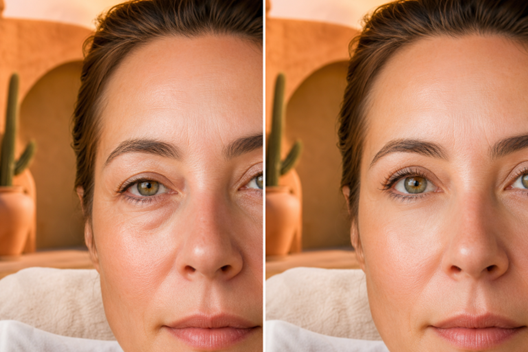
The results of a plasma eyelid lift are subtle in the best possible way.
You won't walk out looking like a different person. You'll walk out — after the 6–12 week healing window — looking like a rested, refreshed version of yourself. The eyes are more open. The lids sit higher. The under-eye area looks smoother and tighter. The overall effect is that people think you've been sleeping better or going on vacation — not that you've had a procedure.
Most clients at Siren Skin Care see:• Visible lift of the upper eyelid with reduction in hooding• Tighter, smoother lower eyelid skin• Results that hold well for 12–24 months before a touch-up is recommended• Progressive improvement — the best results emerge at 3 months as collagen remodeling peaks
Some clients choose to do a second session after 12–18 months to maintain results. Others find that one treatment holds them well for several years. It depends heavily on your skin, your age at treatment, and your sun exposure habits post-treatment.
To see real before and after results, visit our Before and Afters gallery.
Frequently Asked Questions
How much does a non-surgical eyelid lift cost in Tucson?
Pricing varies based on the treatment area and scope. A consultation at Siren Skin Care includes a full assessment and a clear price quote. Generally, plasma eyelid tightening is significantly more affordable than surgical blepharoplasty — which runs $3,000–$8,000+ in Arizona — while delivering comparable cosmetic results for mild to moderate concerns.
How many treatments will I need?
Most clients achieve their goals in one treatment session. For more significant laxity, a second session may be recommended after the initial healing period (typically 6–12 weeks). We discuss this during your consultation.
Does it hurt?
With topical numbing, most clients rate discomfort as a 2–3 out of 10 during treatment. The sensation is brief pinpricks of warmth. The numbing cream makes a significant difference — we apply it generously and wait the full time to ensure you're comfortable.
Will my eyes swell shut?
Swelling is common, especially under the eyes, and is most pronounced in the first 2–3 days. It's temporary and expected. Most clients find the swelling significantly improved by day 5–7. We recommend scheduling your appointment with some downtime for the first week.
Is there any risk to my vision?
When performed correctly by a trained practitioner, plasma eyelid tightening does not involve the eye itself. The treatment is on the skin of the eyelid only. At Siren Skin Care, we take every precaution for eye safety — including proper protective eyewear for clients during treatment.
What's the difference between upper and lower eyelid treatment? Upper eyelid treatment addresses the hooding and excess skin above the lashes. Lower eyelid treatment addresses the crepey, loose skin below. Many clients treat both areas in the same session. The lower lid tends to have less skin to work with and requires a more conservative approach.
Can I wear makeup during healing?
No — avoid all makeup on the healing area until the carbon dots have fully shed and the skin has closed (typically 10–14 days). Using makeup too early can introduce bacteria and interfere with healing.
How do I book?
Book your consultation here (https://www.sirenskincare.co/book-now) — we're conveniently located at 1601 N Tucson Blvd #19, serving clients from across the Tucson metro area, including Catalina Foothills, Oro Valley, Marana, and the University of Arizona area.
Ready to Open Up Your Eyes — Without Surgery?
If you've been curious about a non-surgical eyelid lift in Tucson, this is your sign to book a consultation.
At Siren Skin Care, we take a thorough, honest approach — we'll only recommend plasma treatment if it's genuinely right for you. And when it is, the results speak for themselves: more open, more rested, more like the version of yourself you see in your head.
You don't have to choose between doing nothing and going under the knife. Book your consultation at Siren Skin Care: Call us at (520) 955-65601601 N Tucson Blvd #19, Tucson, AZ 85716
Have questions before you book? Check out our FAQ page or browse our full range of skin rejuvenation services.
Written by Catie Fisher, licensed esthetician and owner of Siren Skin Care in Tucson, Arizona. Siren Skin Care specializes in non-surgical skin rejuvenation treatments and esthetics education, serving clients throughout Southern Arizona.


Comments